

Somewhere in France
The grave of Pte John Joseph Mulqueeney, in Courcelette British Cemetery, Somme, France. He was killed on 17 August 1916 near Mouquet Farm. I am extremely grateful to Steve John for providing me with this photograph.
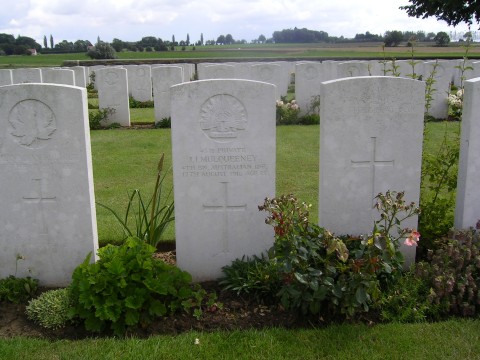
The grave of Pte John Joseph Mulqueeney, in Courcelette British Cemetery, Somme, France. He was killed on 17 August 1916 near Mouquet Farm. I am extremely grateful to Steve John for providing me with this photograph.
It’s the 75th anniversary of Stanley Baldwin’s famous ‘the bomber will always get through’ speech. It’s an important text which is widely quoted, both in my primary and my secondary sources, as a testament to the fear of bombing in the 1930s. But I’ve never actually read it very closely, and I think I’m in
Gary Smailes has put together Military History Carnival 8, and it’s a good one. The item which, inevitably, appealed to me most was Damned Interesting’s account of incidents where the world nearly stumbled into an accidental nuclear holocaust. (But wait, there were more!) Obviously, a scenario where the survival of a significant proportion of humanity,
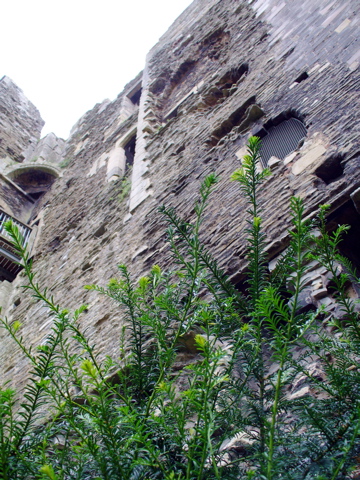
After six weeks in the UK, I finally got to see somewhere other than London when I attended a conference at RAF Cranwell in Lincolnshire. To get to Cranwell, I took a GNER train from King’s Cross to Newark in Nottinghamshire, where a RAF courtesy bus took me the rest of the 20km or so
Every day during the Blitz, the Daily Mail published a selection of letters from readers on various topics, out of the hundreds received every day. Clearly it can’t be assumed that these are representative of British public opinion generally, or of Mail readers, or even of those readers motivated to write letters to the editor
This week I attended the bi-annual departmental Work in Progress Day, where postgrads give talks on their research. I wasn’t presenting this time around (I did earlier this year) but it turns out that two of my fellow students are also fellow bloggers! (Which, as far as I know, makes a total of three for

While trawling through newspapers I keep an eye out for interesting aircraft-related advertisements. These are not uncommon, most obviously in relation to industries which could claim some relationship with aviation (after any record-breaking flight, there was usually at least one ad pointing out how much the triumphant pilot owed to some petroleum product or other).
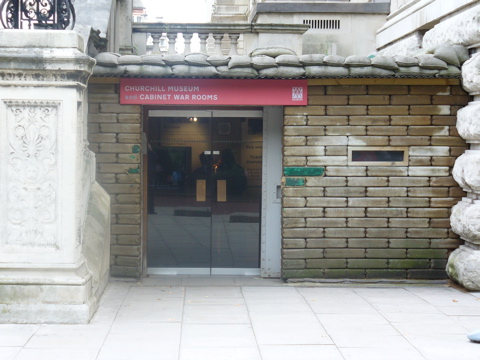
One week I’m looking out over London’s skyline from the top of St Paul’s, the next I’m exploring underneath its streets, at the Churchill Museum and Cabinet War Rooms. But this post is only about the latter, as no photography is allowed in the Museum. That’s OK: while the museum was most interesting and very
Alan Kramer. Dynamic of Destruction: Culture and Mass Killing in the First World War. Oxford: Oxford University Press, 2007. The barbarisation of warfare from the Balkan wars onward, including the targeting of civilians. This looks the goods (and a worthy successor to the book he co-authored with John Horne, German Atrocities, 1914), though oddly there’s
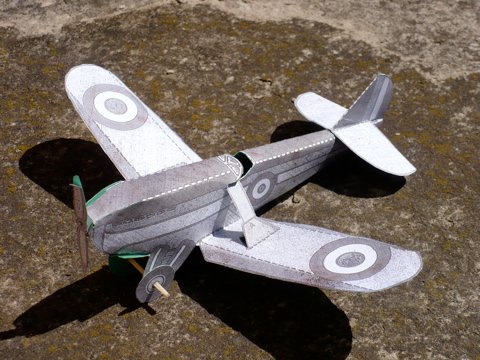
Here’s something a bit different. It’s a paper model aeroplane which I made from a design published on 30 June 1934 in “Boys and Girls”, the weekly children’s supplement to the Daily Mail. The claim is made there that it glides, but sadly all mine does is stall and then enter a tailspin … but