
Periodicals

1940s, Books, Ephemera, Periodicals, Pictures, Words

On ‘the Few’

[Cross-posted at Cliopatria.] As Alan Allport has noted, Winston Churchill’s famous speech of 20 August 1940 was and is remembered for a ‘single, unrepresentative sentence’, i.e.: Never in the field of human conflict was so much owed by so many to so few. The speech was given during the Battle of Britain, and ‘the Few’ […]

1910s, 1940s, Archives, Books, International law, Nuclear, biological, chemical, Periodicals, Rumours

Black death rain

In a discussion of the activities of MI5’s Port Control section during the First World War, Christopher Andrew mentions German musings about using biological weapons against British civilians: The most novel as well as the most sinister form of wartime sabotage attempted by Sektion P was biological warfare. At least one of its scientists in

1940s, Air defence, Periodicals, Pictures

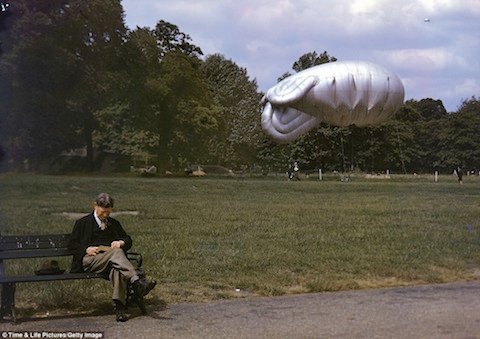
Peace

This was one of several colour images of wartime London published by the Daily Mail (for which see a much bigger version; but do not read the comments). I have nothing interesting to say about it; I just like it, is all. (Via @lucyinglis and @fleming77.)

1940s, Periodicals, Reprisals, Rumours

Vox pops — IV

Another source of information about public opinion on reprisals during the Blitz is hearsay — what people reported that other people thought. This can give us an insight into contemporary judgements of the public mood. But, as with letters to the editor, hearsay is highly problematic too. It’s only possible to get a good grasp

1940s, Periodicals, Reprisals

Vox pops — III

In my previous post I identified three newspapers which published extended correspondence from their readers about reprisals during the Blitz — The Times, the Manchester Guardian and the Daily Mail — one of which provided its own analyses of all the letters it received — the Mail. To try and assess whether these newspapers might

1940s, Periodicals, Reprisals

Vox pops — II

After opinion polls, the rest of the evidence for public opinion on reprisals is more impressionistic. I’ve already noted the conclusions of those who have plumbed the Mass-Observation archives (and Tom Harrisson didn’t just plumb the archives, he ran Mass-Observation during the war), and as I haven’t done that myself I’ll let them stand. But

Scroll to Top