

It’s that quote again — V
So, to conclude my survey of the career of Stanley Baldwin’s phrase ‘the bomber will always get through’ in the British press (or at least in the British Newspaper Archive), here’s how it fared during the Second World War.

So, to conclude my survey of the career of Stanley Baldwin’s phrase ‘the bomber will always get through’ in the British press (or at least in the British Newspaper Archive), here’s how it fared during the Second World War.

The man: Stanley Baldwin. The place: the House of Commons. The date: 10 November 1932. The quote: I think it is well also for the man in the street to realize that there is no power on earth that can protect him from being bombed, whatever people may tell him. The bomber will always get
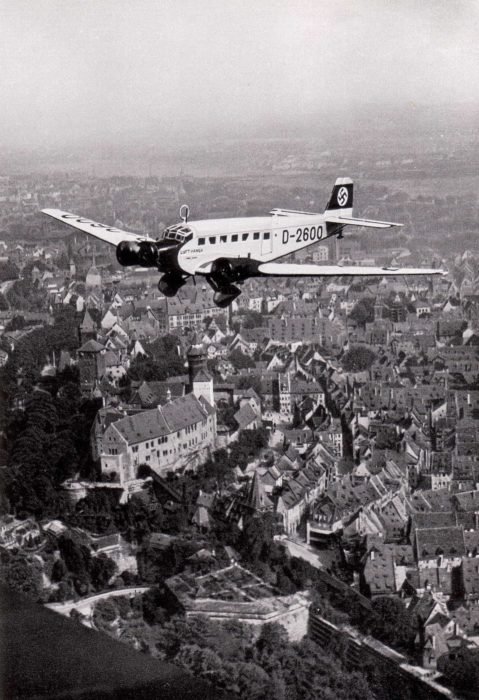
Swastika Night was written by Katharine Burdekin under the pseudonym Murray Constantine. It’s a dystopian novel in which Nazi Germany and Imperial Japan have conquered the world and divided it between them. Nothing so original in that, you might think — except that Swastika Night was published in June 1937, before the invasion of Poland
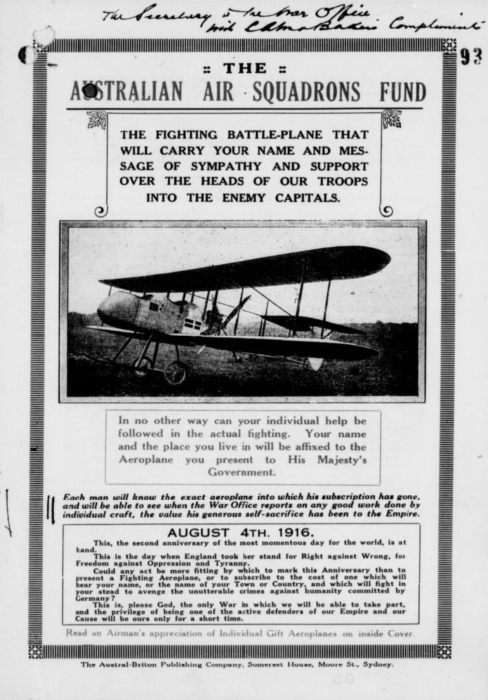
This is the cover of a leaflet produced in 1916 by the Australian Air Squadrons Fund, the Australian arm of the Imperial Air Flotilla which raised funds around the British Empire for presentation ‘battle-planes’ for the Royal Flying Corps. My interest in it is not so much for its own sake, though I am struck

Since this thread received absolutely no love over on Twitter, some lazyblogging of a 1944 article entitled ‘Jargon of the skies’ by James E. Wellard on RAF and US Army slang, published in the Toronto Star Weekly (via the Perth Sunday Times): — Brett Holman (@Airminded) April 30, 2019
A long time ago I wrote about the idea that the advance of technology had annihilated Britain’s traditional maritime defences. This claim was famously — supposedly — made by Lord Northcliffe, founder and owner of the Daily Mail, after seeing Alberto Santos-Dumont fly in France in 1906: ‘England is no longer an island’.1 It’s so
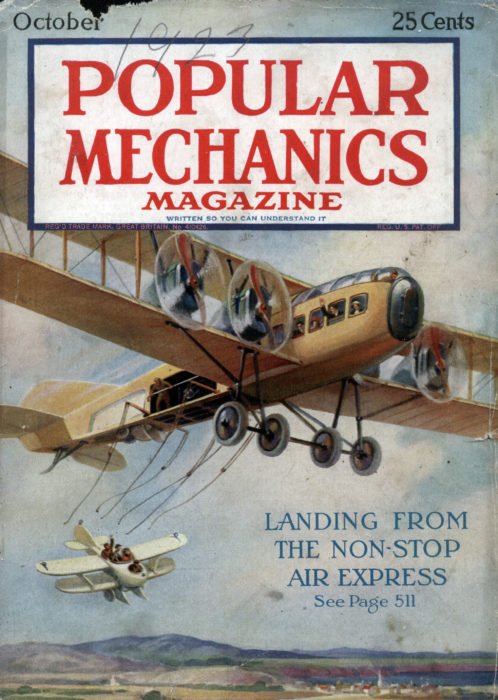
John Ptak asks of this cover from the October 1922 issue Popular Mechanics: ‘why?’ It’s a good question. The accompanying article doesn’t really help: Consider yourself aboard a giant airplane whose whirring propellers rapidly drive from view faint objects on the earth far below. As towns and hamlets recede in the distance you realize that
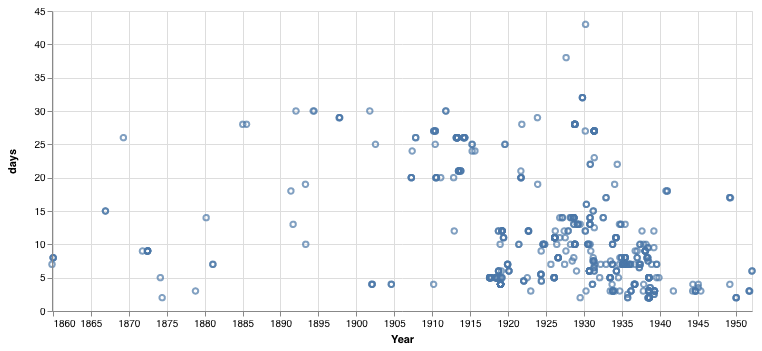
[Cross-posted at Airplay.] Australia is a long way from anywhere, even from itself. It nearly always takes a long time to get to where you want to go. Historian Geoffrey Blainey famously popularised the idea that this remoteness has shaped Australian history and culture in the title of his 1966 book, The Tyranny of Distance.
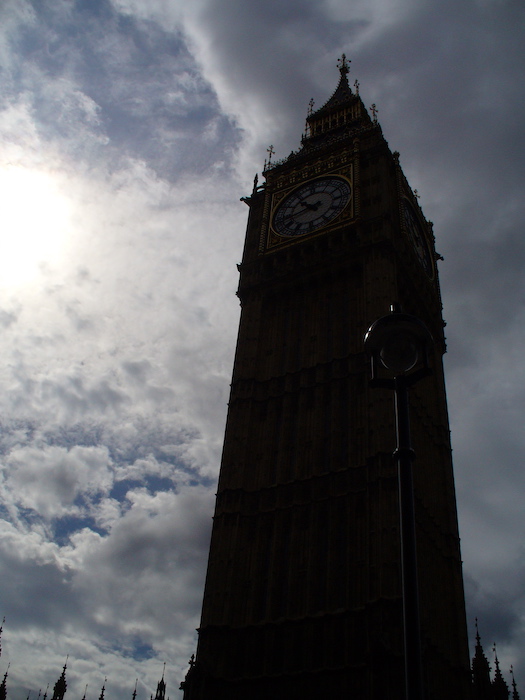
As part of a discussion about the worldwide syncronisation of time, Yuval Noah Harari writes: During World War Two, BBC News was broadcast to Nazi-occupied Europe. Each news programme opened with a live broadcast of Big Ben tolling the hour — the magical sound of freedom. Ingenious German physicists found a way to determine the

This is the cover of the November 1937 issue of an American pulp magazine called Dare-Devil Aces. I vaguely knew about the existence of these aviation adventure magazines, or air pulps, but I’d assumed they were filled with stories of chivalric air combat of the Great War. Many undoubtedly were, but that’s not what this