
1940s, Aircraft, Art, Books, Ephemera, Pictures

Odd plane out

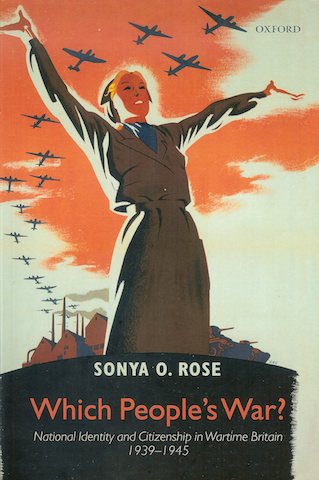
I recently read Sonya O. Rose’s Which People’s War? National Identity and Citizenship in Wartime Britain, 1939-1945 (Oxford: Oxford University Press, 2003), which is interesting on such subjects as anti-Semitism during the Blitz. But I kept being drawn back to the front cover, for a completely trivial reason. The illustration is from a 1941 poster

Pictures, Travel 2009

Swansea

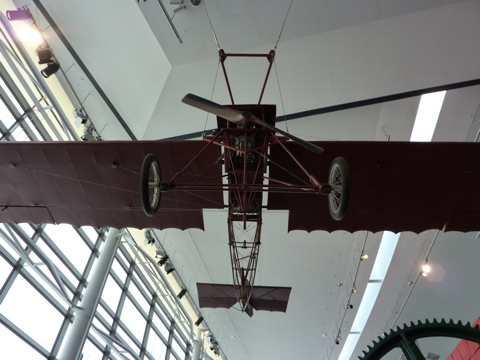
After my day of fortifications I felt it was time for a change of pace, so I headed east for Swansea. The main attraction here (other than the Driver and Vehicle Licensing Agency, of course) is the National Waterfront Museum, which explores the industrial history and technological of Wales. Of which there is quite a

Blogging, tweeting and podcasting, Tools and methods

After; and before?

[Cross-posted at Cliopatria.] Since graduating I’ve become what they call an ‘independent scholar’, meaning I currently have no academic job but still have the irrational desire to do research. I’d certainly like to be a dependent scholar, but it turns out they don’t hand out jobs with your testamur.1 Who knew? So there are things

1930s, 1940s, After 1950, Cold War, Collective security, Nuclear, biological, chemical, Phantom airships, mystery aeroplanes, and other panics, Radio

The field marshal and the ghost rockets

Field Marshal Jan Smuts, prime minister of South Africa, broadcast a speech on the BBC on 29 September 1946. He talked about the prospects for peace in the post-war world, a subject on which he could claim some authority, since he had helped unify Anglophones and Afrikaners after the Boer War, and was involved in

Acquisitions, Books

Acquisitions

Peter J. Bowler. Science for All: The Popularization of Science in Early Twentieth-Century Britain. Chicago and London: Chicago University Press, 2009. How and what the public learned about science was important in an age of technological warfare, and this has a decent number of entries in the index under ‘military applications of science’. Tom Buchanan.

Scroll to Top