
Periodicals

Illustrated London News, 31 August 1912, 20
1910s, Periodicals, Pictures

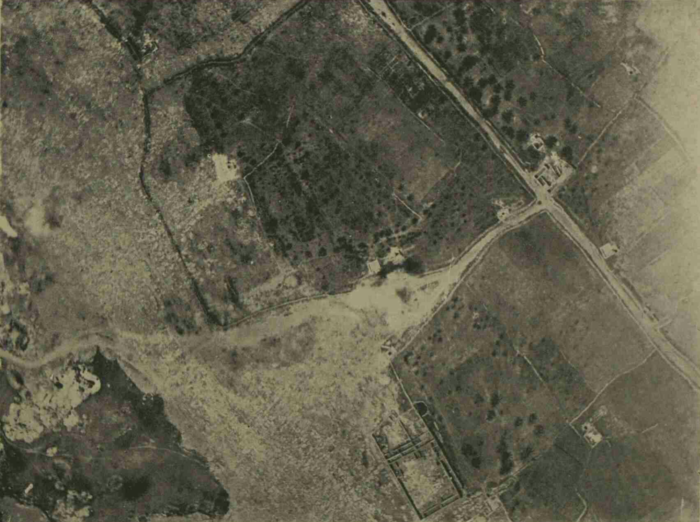
The fire on the oasis of Ghariunes

This must be one of the first ever photographs ever taken of an air raid, simply because it was one of the first ever air raids, during the Italian invasion of Ottoman Tripolitania of 1911-12. It appeared in the Illustrated London News on 31 August 1912 with the following caption: PHOTOGRAPHED FROM THE DIRIGIBLE WHICH […]

1910s, Australia, Periodicals, Phantom airships, mystery aeroplanes, and other panics

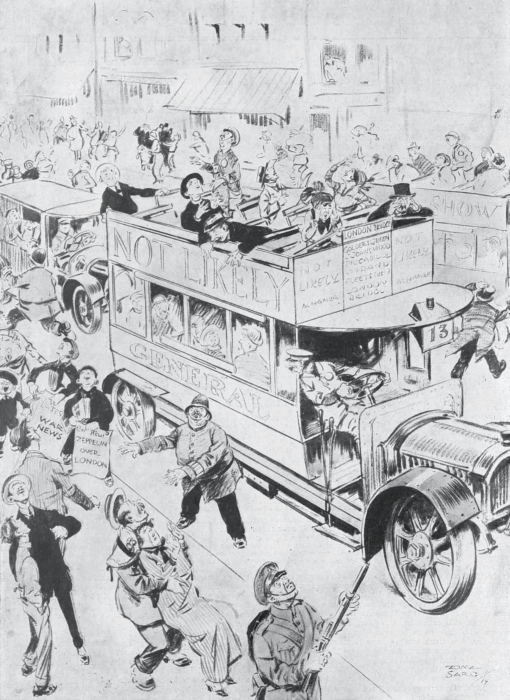
A conspiracy of boodlers

The default explanation for the Australian mystery aeroplane panic of 1918 was a conspiracy theory: they were enemy aircraft, deployed by German merchant raiders operating off the Australian coast, or perhaps flying from secret aerodromes deep in the bush. Either way they were thought to be collaborating with German spies on shore, as evidenced by

Ratio of articles in the British Newspaper Archive containing the phrase ‘Le Queux’ to total number of issues, 1890–1932
1900s, 1910s, 1920s, 1930s, Before 1900, Periodicals, Phantom airships, mystery aeroplanes, and other panics, Pictures, Plots and tables, Publications

Publication: ‘William Le Queux, the Zeppelin menace and the Invisible Hand’

Critical Survey has just published an early access version of my peer-reviewed article ‘William Le Queux, the Zeppelin menace and the Invisible Hand’ — that’s right, no subtitle! — here. Here’s the abstract: In contrast to William Le Queux’s pre-1914 novels about German spies and invasion, his wartime writing is much less well known. Analysis

Sea, Land and Air, February 1920, 765
1910s, 1920s, Archives, Australia, Civil aviation, Periodicals, Phantom airships, mystery aeroplanes, and other panics, Pictures

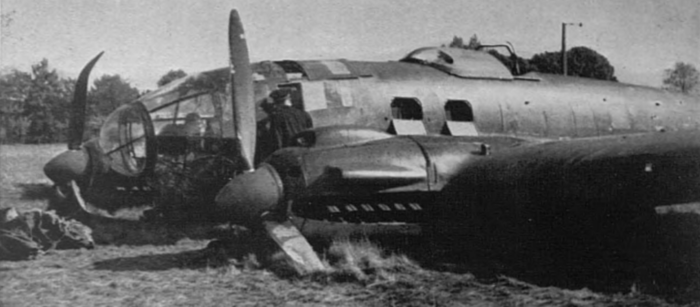
Alien airmen and will-o’-the-wisp bridges

Although the war had been over for more than a year by this point, in 1920 the editor of Sea, Land and Air issued a rather hysterical warning of the danger of foreign pilots being allowed to fly in Australia.1 The passenger-‘plane of to-day may be the bomber of to-morrow. It depends on the man

Sphere, 12 December 1936, 496
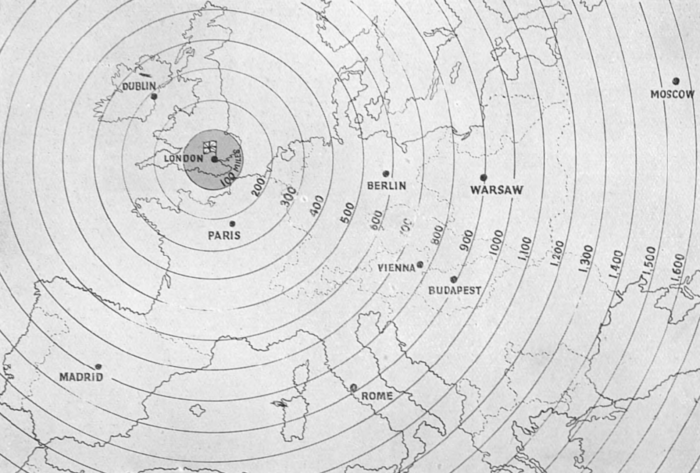
1930s, Air defence, Books, Civil defence, Collective security, Maps, Periodicals, Pictures, Publications

It’s that quote again — III

After the drama of 1934, ‘the bomber will always get through’ appears less frequently in the British Newspaper Archive (BNA) in 1935 (though still at about twice the level than in 1932 or 1933). But it is still mostly being used in a very political way. This is not surprising, with the general election contested

Scroll to Top