
Civil defence

Junkers A.35b
1930s, Aerial theatre, Books, Civil defence, Disarmament, Periodicals, Phantom airships, mystery aeroplanes, and other panics

The phantom phantom air raid — II

So if there were no mystery aeroplanes over Berlin on 23 June 1933, and nobody who even saw any mystery aeroplanes, why did the German government and press say otherwise? There are three-ish reasons, that I can see. The first is the most obvious. It was strongly implied in the original English-language reports that the […]

1930s, 1940s, Books, Civil defence, Phantom airships, mystery aeroplanes, and other panics, Rumours

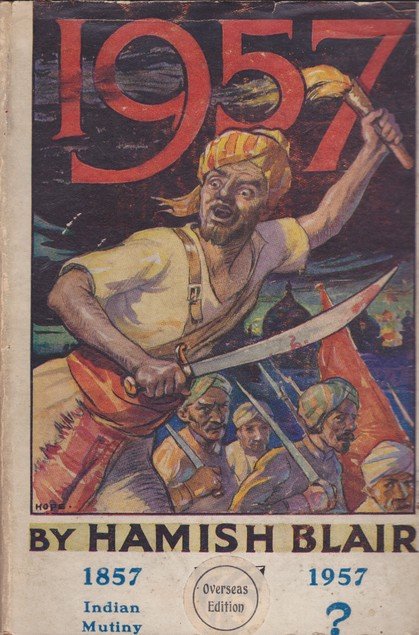
Air panics of the British Raj

As long-time (and very patient) readers of this blog will know, I am fascinated by the historical evidence for what I term air panics. Most obviously this includes phantom airship and mystery aeroplane panics, but also rearmament panics, Zeppelin base panics, red balloon panics… anything and everything which provides evidence for what the British people

1910s, Archives, Books, Civil defence, Phantom airships, mystery aeroplanes, and other panics, Rumours

The airship panic of 1915 — V

One of the advantages of studying wartime airship panics, like the one in January 1915, is the relative abundance of private archives, diaries, letters and interviews for the 1914-1918 period which have been collected and catalogued. This makes it theoretically possible to compare the press view and the official view with the view from below,

1910s, 1920s, 1930s, Air defence, Books, Civil defence, Collective security, Games and simulations, International air force, Nuclear, biological, chemical

Gaming the knock-out blow — III

A key element in any wargame is the scenario. It sets the boundaries in time and space of the simulation, as well as its initial conditions. For a historical wargame, a scenario might be the battle of Cannae, or the British and Canadian sectors at D-Day. Creating such scenarios involves researching orders of battle, contemporary

1910s, Academia, Archives, Civil defence, Grants, Phantom airships, mystery aeroplanes, and other panics, Rumours, Tools and methods, Travel 2014

More

I’ve been awarded a small grant by the University of New England to fund research into ‘Popular perceptions of the German threat in Britain, 1914-1918’. I’m very fortunate to have received this and very grateful. The basic idea is this: This project will investigate the British public’s reaction to the threat of German attack during

1910s, Art, Australia, Books, Civil defence, Periodicals, Phantom airships, mystery aeroplanes, and other panics, Pictures

The hydroairplane-supersubmarine threat to New York

[Cross-posted at Society for Military History Blog.] New York waited for an air raid in June 1918. For thirteen nights from 4 June, much of the city was blacked out to avoid giving German pilots any assistance in locating targets to bomb. The New York Times reported the following day that: Electric signs and all

1940s, Civil defence, Periodicals, Reprisals

After Millennium — IV

What was the response to the Canterbury Baedeker raids? There was actually surprisingly little direct comment in the British press, but the major theme was to reaffirm that British raids on German cities were not reprisals but attacks on legitimate targets; whereas German raids on British cities were not even reprisals but merely spite. In

1940s, Civil defence, Periodicals, Reprisals

After Millennium — III

As with the Lübeck and Rostock raids over a month earlier, the RAF’s thousand bomber raid on Cologne on 30 May 1942 triggered reprisal attacks by the Luftwaffe (though in far smaller numbers than Bomber Command was able to muster). Another round of Baedeker raids, in other words. This time, however, there was only one

Scroll to Top