
Intertextuality
[Cross-posted at Cliopatria.] Watching this: made me think of this:
[Cross-posted at Cliopatria.] Watching this: made me think of this:
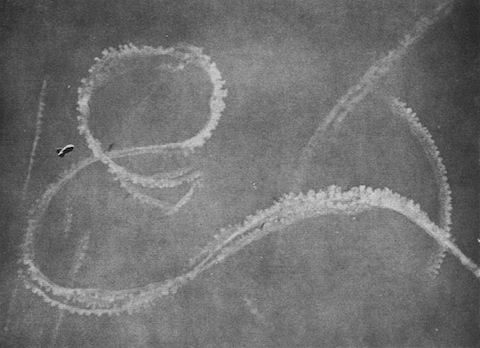
In the summer of 1940, strange patterns like these began to appear in the sky over southern England. Today they wouldn’t be thought so unusual (except that they are on the twisty side), for contrails are a common sight now, especially over London. Seventy years ago, however, they were a little mysterious, even to those
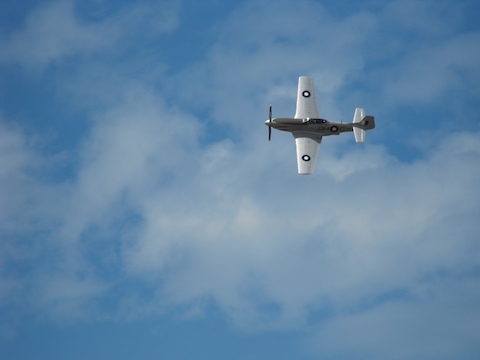
A few weeks ago I went along to the biennial RAAF Museum Pageant. The RAAF is, of course, the Royal Australian Air Force, and the RAAF Museum is at Point Cook, on the outskirts of Melbourne. Despite being relatively nearby I’ve never been, so when fellow aviation blogger JDK (who volunteers at the Museum) suggested
In February 1912, the International Arbitration League issued ‘A Memorial Against the Use of Armed Airships‘, an early proposal for arms control. The memorial claimed that ‘For the first time, in the face of a new development of the arts of fighting, nations possess both the conscience and the machinery necessary to check that development
John Hersey. Hiroshima. London: Penguin, 2001 [1946]. One of the most important pieces of journalism of the 20th century; with a new final chapter written by Hersey four decades later. I’m teaching Hiroshima mon amour again this semester and so this might be useful preparation. Robert A. Pape. Bombing to Win: Air Power and Coercion
Harry Houdini is still famous as a magician and escapologist, but he was also a pioneer aviator. One hundred years ago today, on 18 March 1910, he carried out the first powered, controlled flight in Australia, at Diggers Rest, near Melbourne. This testimonial from witnesses appeared in the Melbourne Argus, 19 March 1910, 18: To
I’ve finally run out of photos from last year’s trip to the UK — well, almost! Here are some miscellaneous shots which didn’t make it into the previous posts.
The following letter appeared in the Evening News, 13 12 March 1935, 6: On the brick wall at the side of our street door can still be seen faintly two large letters, “P. P.,” which stood for Poplar Patrol. Every Friday night it was my job to collect 3d. from each house-hold that belonged to
On the last night of January 1916, a large force of seven Zeppelins crossed over the Wash into Norfolk, heading for the industrial cities of the Midlands. Unsure of their location, most of them instead dropped their bombs on relatively unimportant targets. But at least they got home okay. The defending aircraft of the RFC
This is Warrington Crescent, Maida Vale, on the morning of 8 March 1918, after it had been hit by a 1-ton bomb dropped by a Giant bomber the night before — one of the largest to fall on London during the First World War and the most materially destructive. Twelve people were killed (including Lena