
Last year I gave a lecture where I said that Things to Come, the 1936 Alexander Korda production of H. G. Wells’ novel The Shape of Things to Come, was not a very popular film, that not many people would have seen it. I had to retract that, but I then said that
I stand by my other point, however, which was that Things to Come is actually very singular, at least in British feature films: there are very few depictions of a city being turned to rubble by air attack
Now I have to retract that too, as since then I’ve compiled an — admittedly short — list of interwar British films which do depict cities being destroyed by bombing, or at least coming under the threat of air attack.
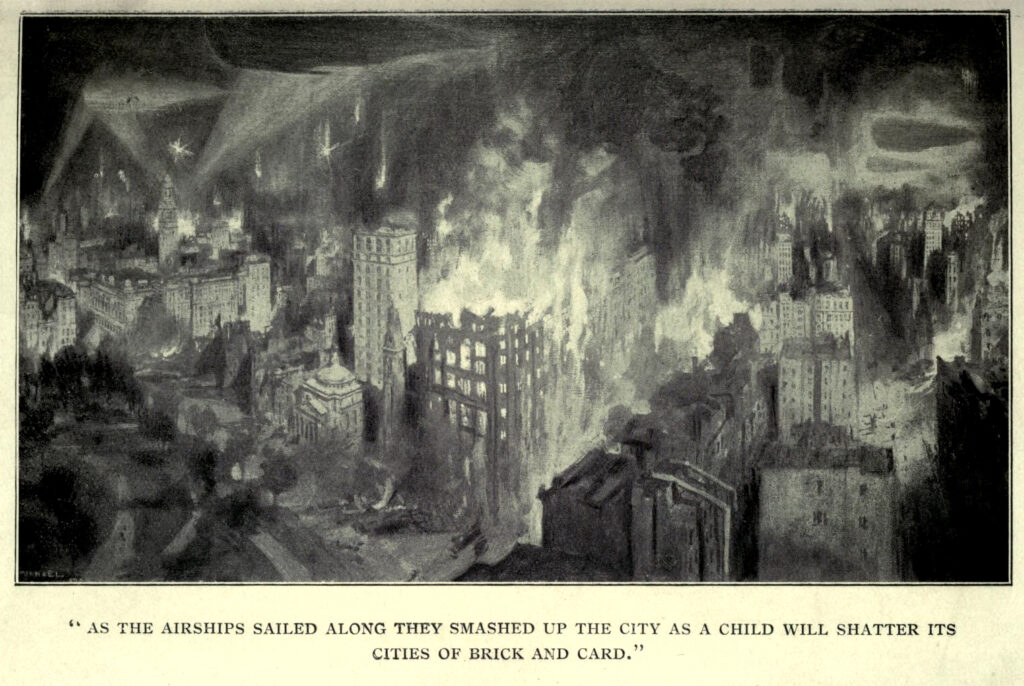
Some of these I did know about, such as The Airship Destroyer (1909). It’s now available on YouTube, under an alternate title, Battle in the Clouds. In it, an airship bombs a city, which is last seen in flames. I’m not sure if either of the sequels, The Aerial Anarchists and Pirates of 1920 (both 1911) had anything comparable.
There’s a long gap after that. The Flight Commander (1927) climaxes with Sir Alan Cobham bombing a Chinese village, which was filmed at the RAF Pageant, but that’s more air control than strategic bombing. In High Treason (1928), written by Noel Pemberton Billing, an aerial war is threatened, but averted. There were a few American films set during the First World War which showed Zeppelin raids on London, including The Sky Hawk (1929) and Hell’s Angels (1930), but they’re, well, American.1
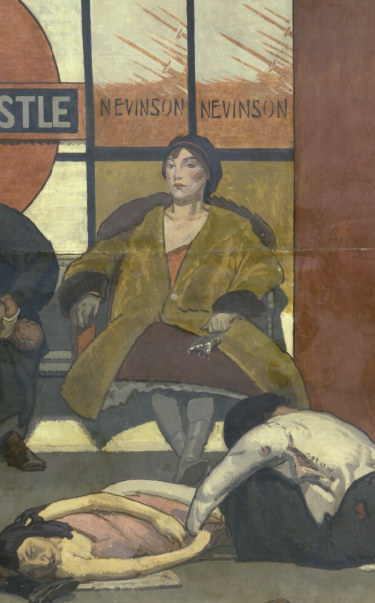
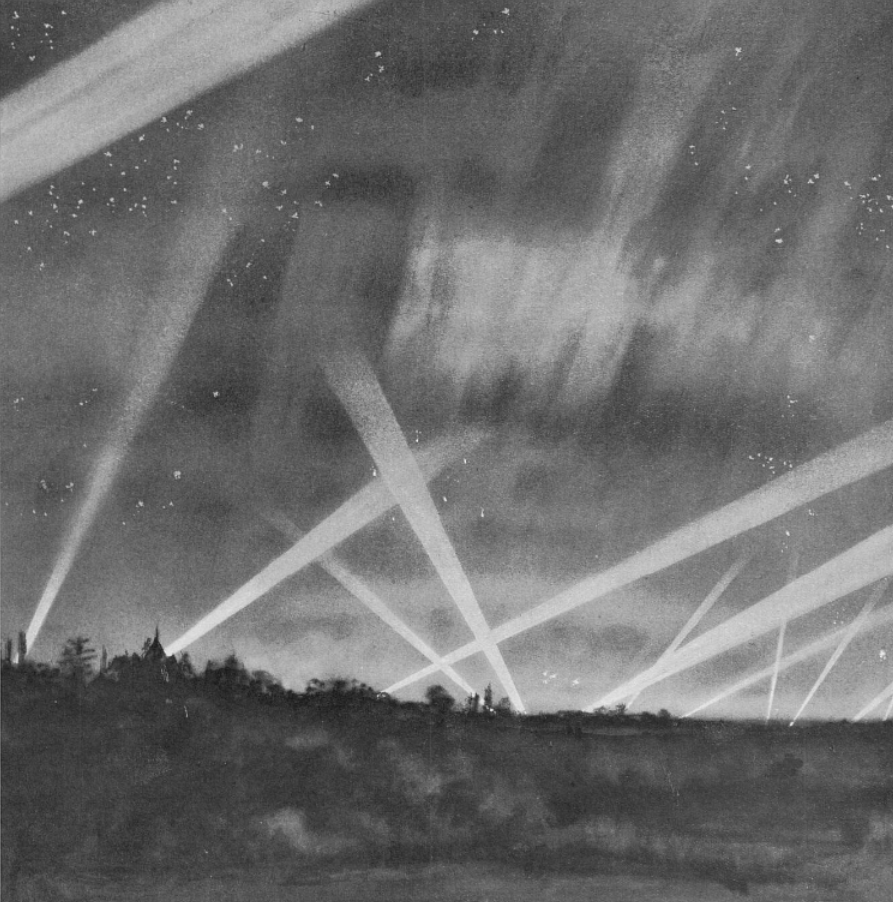
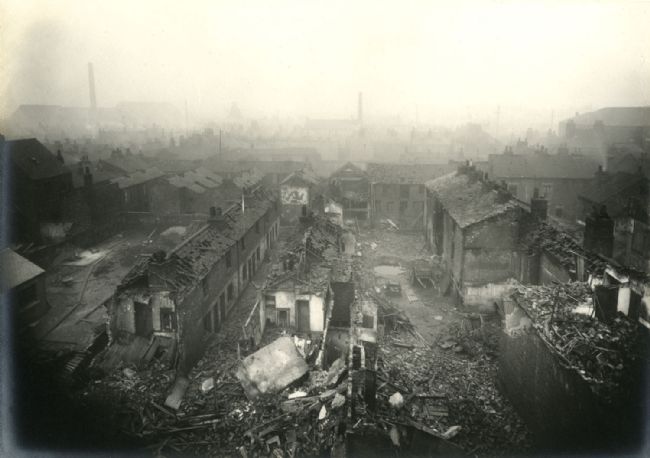
Things to Come (1936) was actually, I think, the first proper (i.e. scary) depiction in a British film of the effects of a truly devastating air raid. But there were others over the next few years. A pair of short instructional films, The Gap (1937) and The Warning (1939), have long piqued my interest, but unfortunately I didn’t get to see them while in London. The Gap was a recruiting film for the Territorial Army, which manned Britain’s anti-aircraft guns. London is hit by a surprise air raid, and because there are not enough AA gunners it is devastated. The Warning was aimed at drawing in volunteers for air raid precautions, and portrays the terrible aftermath of an air attack on Nottingham. Air defences swing into action, but do little to prevent the carnage.
Read the rest of this entry »
- I think one or the other of these was the source of a similar scene in a British film from the 1930s or 1940s, or perhaps it was from the Korda documentary Conquest of the Air (1936, but not released until 1938). I can’t for the life of me remember what film I saw it in, but the scene was too short and too lavish to have been made specially.