Conferences and talks

You are currently browsing the archive for the Conferences and talks category.

I'm giving a talk at the 2010 antiTHESIS interdisciplinary symposium, to be held on 9 July at the University of Melbourne's Graduate Centre. The theme of the symposium is 'futures', which immediately grabbed me -- as did last year's, 'fear', but I didn't get my act together in time for that -- so I thought I'd use the opportunity to play with some ideas I touched on in the conclusion to my thesis.

Here's my title and abstract:

Avoiding apocalypse: lessons from Britain before the Blitz

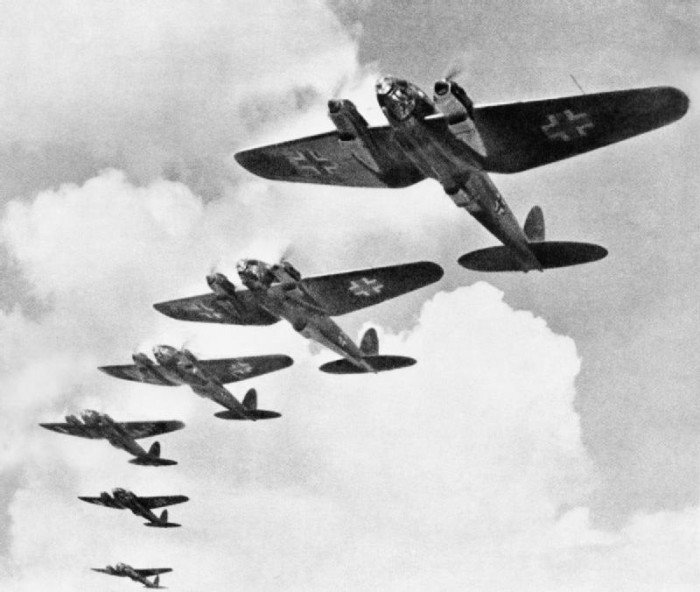
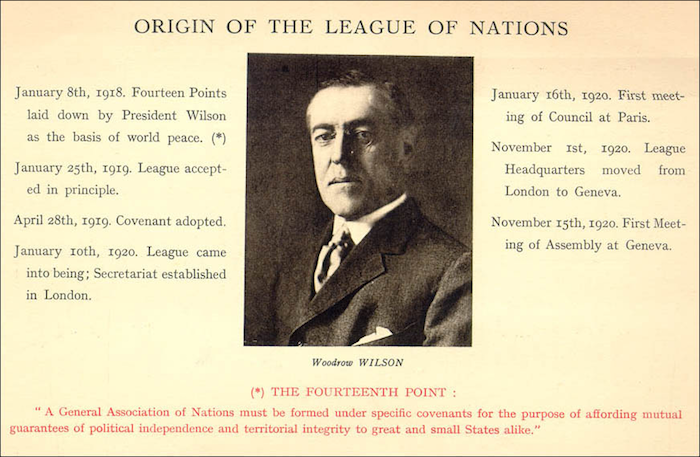
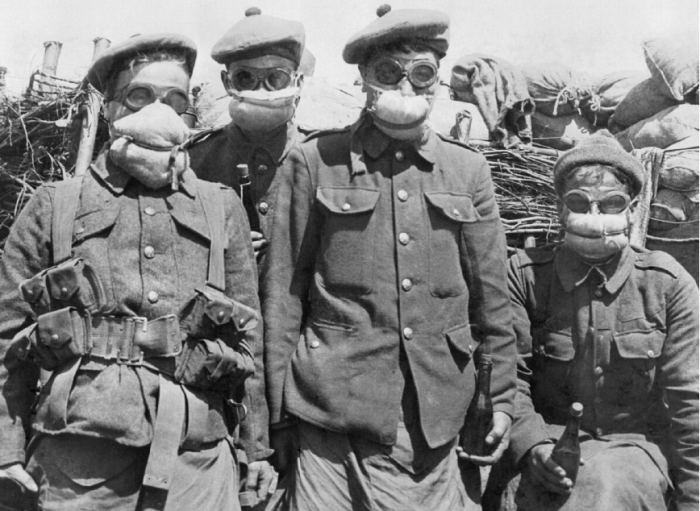
This is an age of anxiety. Our civilisation -- from a global scale down to the local level -- is faced by a bewildering range of possible catastrophes: climate change, nuclear terrorism, economic collapse, pandemics, and even asteroid impacts. How should we respond to these threats to our life as we know it? Are our political and cultural systems even capable of reacting effectively to such huge challenges? History provides some answers: this is by no means the first age of anxiety. One particularly interesting example comes from Britain in the 1930s and the almost universal dread of the next war: of annihilation from the air of cities and civilians, by gas and blast and flame. Many proposals were put forward for the prevention of this apocalypse, ranging from the construction of a British bomber fleet second to none, to a nation-wide system of deep air-raid shelters, to an international air force to maintain peace and punish aggression. The choices, in other words, were to resist, adapt or negotiate. In this paper, I will explore which approaches were attempted -- and which were not -- and why, and attempt to draw conclusions for us today, particularly with respect to the global response to climate change.

This also sheds some light on my previous post: perhaps it's not that I don't care about strategy per se, just military strategy?

Exeter Cathedral

Later the same day that I arrived at Heathrow and visited Salisbury, I was down in the southwest of England -- Exeter, to be precise. I was there for a conference but arrived a day early so I could have a poke around. There are indeed some things very worth seeing in Exeter, although the city centre was very heavily blitzed on 4 May 1942, destroying many fine historic buildings. Above is a stained glass window in Exeter Cathedral commemorating that night.
Read the rest of this entry »

This post relates to my trip to England and Wales in September 2009.

Chris Williams (AKA Chris A. Williams) has put online a recording of a lecture he gave last year about the evolution of the police C3I system, by way of train control and air defence. (See also here.) More like this, please!

Yep, me! On current plans, I'm flying in to Heathrow on 9 September and flying out on 1 October (if I'm not mistaken, on an A380 both ways). It's mainly for a holiday and to catch up with people, but I will also be attending the Bombing, States and Peoples in Western Europe 1940-1945 conference at Exeter. That finishes on the 12th, after which I'm thinking of heading down to Cornwall and then probably Wales. After that I'm not sure (maybe even a quick jaunt over the Channel?) but I'll probably be in London for a week or so at the end of September.

Exciting!

This post relates to my trip to England and Wales in September 2009.

Thanks to Jonathan for the tip: the Bombing, States and Peoples in Western Europe 1940-1945 project is holding a workshop at the University of Reading on 13 March 2009, on 'War, Bombing, and Trauma: World War 2 and Comparative Perspectives'. It's free but the registration deadline is 3 March 2009. They are also holding an international conference at the University of Exeter on 10-13 September 2009, which will explore the 'variety of political and cultural responses to bombing carried out against predominantly urban targets in Britain, France, Germany and Italy during the Second World War'. They both sound like entirely too much fun!

Here are a couple of photos I used in my AHA talk last week:

Ju 52/3m at Croydon

This is a Lufthansa Ju 52/3m, one of the great airliners of the 1930s, at Croydon aerodrome, ca. 1936. Other operators included Swissair, Aeroflot, and British Airways (an ancestor of the current airline of the same name).
Read the rest of this entry »

This is the talk I gave at Earth Sciences back in May. It's long and picture heavy and much of it will be be familiar to regular readers, but some people expressed some interest in it so here it is. I've lightly edited it, mainly to correct typos in my written copy. I've put in links to the Boswell drawings because they're under copyright, and I've replaced one photo because I realised it was of British Army Aeroplane No. 1b, not British Army Aeroplane No. 1a! How embarrassing.

Facing Armageddon: Britain and the Bomber, 1908-1941

Today I'm going to give you an overview of my PhD thesis topic. My broad area is the history of military aviation in the early twentieth century, so first I'll give you a little background on that.

Wright Flyer (1903)

The first heavier-than-air manned flight was made by the Wright brothers in 1903, as you can see here. Within a few years, countries around the world started thinking about how they could use this new technology for warfare.
Read the rest of this entry »

Admittedly, not very much!

I'm giving a talk at 4pm, next Friday, 16 May 2008, in the Fritz Loewe Theatre at the School of Earth Sciences, University of Melbourne. The title is "Facing Armageddon: Britain and the Bomber, 1908-1941" and it will be a broad overview of my thesis topic. It should be fun, for me at least -- it's the department where I've worked for many years as the IT manager, so it will nice (and perhaps challenging) to try to explain to all the geologists and climatologists exactly what it is I've been doing these past few years. Thanks to Malek Ghantous of the Earth Sciences Postgraduate Group for the invite and for organising this -- it's the first, and quite possibly the last, time a poster has been made to advertise a talk I've given!

If anybody local has nothing better to do on a Friday afternoon, you're more than welcome to attend the talk (and enjoy the refreshments afterwards). Perhaps just drop me a line first, though, so we can anticipate any massive surge of interest (ha!) There's a map showing where Earth Sciences is after the jump. (The lecture theatre is on the 2nd floor, right near the main entrance, just past the disused theremin/mural ...)
Read the rest of this entry »

I'll be giving a talk entitled “From Darfur to London: P. R. C. Groves and the construction of aerial apocalypse, 1916-1922”, at the Australian Historical Association's Biennial Conference, Locating History, 7-10 July 2008, which is conveniently being held at the University of Melbourne. Here's the abstract:

The idea that cities could be shattered and wars won by aerial bombardment in a so-called 'knock-out blow' was embryonic before the Great War. After the war, such exaggerated theories became an orthodoxy among airpower theorists and, by the 1930s, among the wider British public -- an important factor underlying support for pacifism, appeasement and collective security up to the Munich crisis. But the war itself was crucial to both the formulation and the propagation of the theory of the knock-out blow.

Most responsible for promoting this idea of the knock-out blow to a wider audience was General P. R. C. Groves, a veteran of both aerial and bureaucratic warfare: the British equivalent of Douhet and Mitchell. Convinced that Britain's air defences were being dangerously neglected, he retired from the RAF in 1922 and waged a highly-visible press campaign on the issue. In so doing, Groves relied upon and popularised the theory of the knock-out blow, drawing on his experiences in using airpower against rebellion in Darfur, in trying to win the war in France, and in trying to suppress a German resurgence after 1918 -- and thereby, ironically, complicated the task of dealing with Germany after 1933.

I wrote that a few months ago, and some of it strikes me as a bit strange now, but I doubt that anyone is going to be tracking how rigorously I adhere to my abstract!

I'm currently slated to talk just after lunch on the first day. I've never been before, but it must be Australia's biggest history conference, with twelve parallel streams. One of these is a war and society-type stream, so I should be right -- although the title that's intriguing me the most is from one of the others: Erin Ihde's "Do Not Panic: Hawkwind, the Cold War and 'the Imagination of Disaster'"! I see that fellow bloggers Megan Sheehy and Melissa Bellanta will be giving papers too.

Should be fun.

FE.8 over trenches

On Friday, I went along to a talk on "Great War aerial photography: a source for battlefield survey and archaeology?", given by Birger Stichelbaut of Ghent University in Belgium. This brings the total number of in-any-way-related-to-early-20th-century-aviation talks given at the University of Melbourne during my PhD candidacy (as far as I know and excluding a couple I've given) to one (1). And even this was archaeological and not historical; but it kept me awake even at the quite indecent hour of 10am, so you know it must have been good!
Read the rest of this entry »

« Older entries § Newer entries »